Week 5: Gender Gap
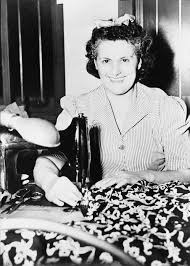
Based on the reading for this week shows that defining gender gap means that the discrepancy providing opportunities, status and attitudes between men and women. The author, John H.M. Laslett, talks about Rose Pesotta and the workers of Los Angeles, whom supported to organize for second time in nine years. Rose Pesotta, who is the vice president of the “International Ladies’ Garment Workers Union” (ILGWU), wrote to her boss on behalf of the poor Latina dressmakers. The letter shows the expression of Pesotta’s anger the way she, as a lone female vice president of ILGWU, had been passed over in favor of a male as manager of the new Los Angeles Dressmakers’ Local 484. Rose been responsible for establishing at this local manufactured.
Rose talks about the Mexican American culture and less about how they are using the sewing machine at their workplace. However she knew that labor, they get paid less. She explains about the ethnic division in the labor force. California was paying women sixteen dollars a week as minimum wage and were not paid on work done at home. Even though Latina make less money and became different part of the culture, the experienced cloakmakers in Los Angeles observed them as competitors and to the efforts to organize the LA locals of the ILGWU.
Despite of the culture were divided and ethnically mixed labor force, there were no secure leadership in the role of ILGWU, they were connected to Women’s Trade Union League whom provided English classes for those woman don’t speak this language, economic benefits, health, etc. Therefore, they were adopted by International Ladies’ Garment Workers Union.
Week 7: Beautiful Trouble

The case study that I am researching is “Small Gifts“. This case study tells that
the interventions that introduces new spaces for conversation and generosity within shopping centers. The series was being conceived as a way of presenting concepts of radical generosity to people who might otherwise not think of themselves as political.
Rajni Shah is an artist whose working in performance and live art. Whether online, in a public space or in a theater, her work aims to open up new spaces for conversation and the meeting of diverse voices. From 2006-2010, she conducted a three-year inquiry into the relationship between gift and conversation in public spaces called small gifts. From 2005-2012, she produced a trilogy of large-scale performances by addressing the complexities of cultural identity.
This case study works is that the interventions don’t ask participants to assume any particular political position, they get involve a much broader range of people than other, more targeted actions. The participatory, conversation-sparking nature of the work allowed for a deeper connection with the principles of generosity and gift economy, and actively encouraged strangers to connect with one another.
Reference:
https://beautifultrouble.org/case/small-gifts/
Week 9: Performing Resistance
Based on this reading talks about how contemporary arts challenges everyday mundane rituals. This reading delves into the questions of identity and human body. This describes whether or not how could humans can adapt to live in a world of technological as well as contemporary advances. This reading connects into the article about Cockettes, a psychedelic performance troupe and community in San Francisco during the late 1960s and early 1970s, and demonstrates how they fought back against the norm by taking drag to different lengths.

CV Dazzle was a website that focused on hiding an identity with different styles of makeup, hairstyles, etc., which
CV Dazzle uses avant-garde hairstyling and makeup designs to break apart the continuity of a face. Since facial-recognition algorithms rely on the identification and spatial relationship of key facial features, like symmetry and tonal contours, one can block detection by creating an “anti-face”.
 Art 3110 Section 03: Social Engagement w/ Fashion, Fiber & Materials